


Minimum wages set for above inflation rises
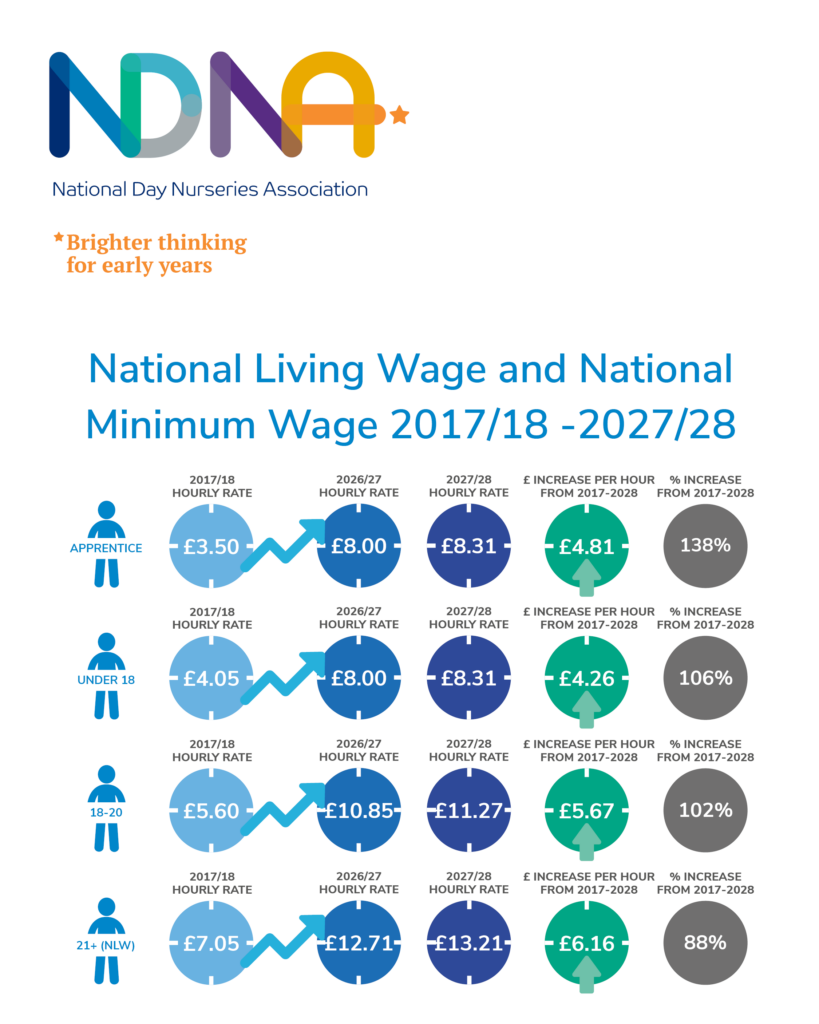
It has now been announced that minimum wages for workers across all age groups are set to increase by 3.9% on 1 April 2027.
The National Living Wage, which applies to those aged 21 and over, will rise from £12.71 to £13.21.
The National Minimum Wage, which applies to those aged 18 to 21, will go from £10.85 to £11.27.
The minimum wage for 16 to 17-year-olds and eligible apprentices has also increased from £8 to £8.31 per hour.
This is breaking from the trend of the last two budgets where the minimum wage for younger workers had increased at a much higher rate compared to over 21s.
Tim McLachlan, CEO of National Day Nurseries Association (NDNA) said: “Within the early education and care sector, pay has historically been lower than in other sectors due to the constraints of government funding rates.
“Next year’s minimum and living wage increases are being widely reported to be 3.9%, above current inflation levels. Any measures that improve pay for lower earners is good news for workers and will help them with the rising cost of living.
“We need to see simple maths from the Chancellor that adds up to the Department for Education and the devolved governments increasing childcare funding rates to be able to meet the new minimum wages. We also need an uplift for providers to be able to pay their staff above those levels. The early years staffing crisis can only improve if providers are able to reward and recognise dedication and talent, to attract people into the roles and keep them within the profession. Our youngest children deserve more than the bare minimum.
“In his Budget, the Chancellor needs to pledge sufficient funding for DfE and the devolved governments in Wales and Scotland – who are also currently expanding government-funded childcare places – to raise the rates to enable this to happen.”
- England
- funding
- minimum wage
- Scotland
- Wales
Similar Articles
Budget supports high street businesses but not nurseries

EYFS profile results: Children making good progress particularly in maths and literacy
